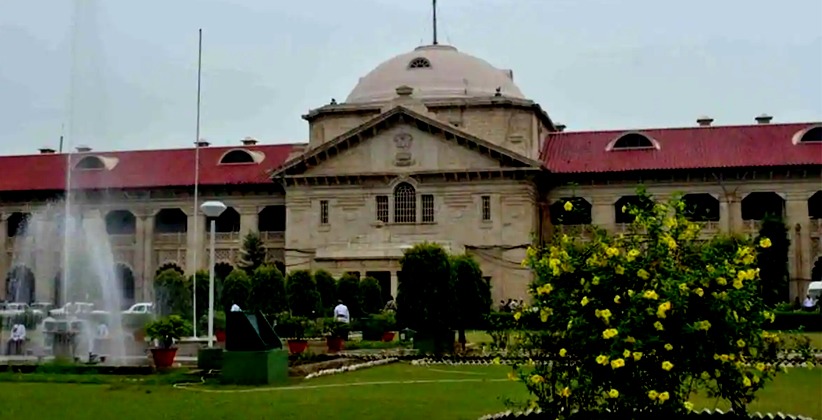
A Division Bench of the Allahabad High Court comprising of Justice Dr. Kaushal Jayendra Thaker and Justice Gautam Chowdhary, in the case of Vimal Kumar & 3 Others v. State of UP & 3 Others concede that the notorious Section 498A of the IPC has more often than not been misused rampantly due to which the husband and his relatives like parents, brothers etc. have suffered time and again without any sufficient ground. The Court directed the police authorities to desist from making automatic/ routine arrests, especially in dowry cases (498A IPC) and strictly comply with the pre- conditions laid down under Section 41-A of the Cr.P.C. The Court further directed all Magistrates to report the names of such police officers who they think make arrests in a mechanical or mala fide manner, so that appropriate action may be taken against them.
Factual Background
The writ petition was filed by the petitioners praying for issuance of a writ order or direction in the nature of certiorari quashing the impugned FIR lodged by respondent No. 4 u/Ss. 498-A IPC and section 3/4 Dowry Prohibition Act; a writ of mandamus commanding the respondents not to arrest petitioners; and award of costs of the writ petition to the petitioners.
The daughter of respondent no. 4 was engaged to the petitioner No. 1 and their marriage was fixed. During this period about 6.5 lacs rupees was given by the respondent no. 4 to the petitioners. It was also alleged that the petitioners demanded a Creta Car and stated if said demand could not be fulfilled then they would not solemnize the marriage.
Case of the Petitioner
It was submitted by learned counsel for the petitioners that the marriage of daughter of respondent no. 4 was fixed with the petitioner no. 1 and after Ring ceremony respondent no. 4 with the ulterior motive, demanded money from the petitioners for solemnizing the marriage with her daughter with petitioner no. 1 and stated that if the same was not fulfilled then petitioners would be falsely dragged in a criminal case, present malicious prosecution has been launched by the respondent no. 4.
It was further conteneded that all the offences were punishable with incarceration below 7 years but the police was regularly visiting the house of petitioners under the influence of respondents No. 4., and u/Ss. 204, S41(1)(b), S.41(1)(b)(ii)(e), S.41(a) of the Cr.P.C. police cannot arrest the petitioners without giving notice and without collecting any credible evidence against the petitioners the police cannot arrest the accused.
Court's attention was invited to the provisions embodied in sections 204, S41(1)(b), S.41(1)(b)(ii)(e), S.41(a) of the Cr.P.C. and reliance was placed on Shaukin Vs. State Of U.P. & Others and Social Action Forum for Manav Adhikar and another Vs. Union of India, Ministry of law and Justice and others.
Get all the updates straight away on your phone. Join us on Telegram Here. or What'sApp Here.
Reasoning and Decision of the Court
The Court firstly proceeded to explain the import and meaning of the amended provisions 41(I)(b) and 41 A Cr.P.C., and to give some illustrations where accused could be arrested straightaway on the lodging of the FIR, and other illustrations where immediate arrests may not be needed, because the Court opined that in many cases the police was still routinely proceeding to arrest accused persons even if they are involved in offences punishable with up to 7 years imprisonment, in contravention of the express terms of Section 41(I)(b) or 41 A Cr.P.C.
In Social Action Forum for Manav Adhikar, it was held that:
"20. (...) when accused alleged with offence punishable up to 7 years imprisonment are produced before them remands may be granted to accused only after the Magistrate satisfies himself that the application for remand by the police officer has been made in a bona fide manner and the reasons for seeking remand mentioned in the case diary are in accordance with the requirements of Section 41(I) (b) and 41 A Cr.P.C., and there is concrete material in existence to substantiate the ground mentioned for seeking remand. Even where the accused himself surrenders or where investigation has been completed and the Magistrate needs to take the accused in judicial custody as provided under Section 170(I) and Section 41(I)(b)(ii)(e) Cr.P.C. prolonged imprisonment at this initial stage, where the accused has not been adjudged guilty may not be called for, and the Magistrate and Sessions Courts are to consider the bails expeditiously and not to mechanically refuse the same, especially in short sentence cases punishable with upto 7 years imprisonment unless the allegations are grave and there is any legal impediment in allowing the bail."
In order to ensure what the Court observed above, the following directions were given:
"11.1. The State Governments to instruct its police officers not to automatically arrest when a case under Section 498-A IPC is registered but to satisfy themselves about the necessity for arrest under the parameters laid down above flowing from Section 41-A of Cr.P.C. 1973;
11.2. All police officers be provided with a check list containing specified sub-clauses under Section 41(1)(b)(ii);
11.3. The police officer shall forward the check list duly filled and furnish the reasons and materials which necessitated the arrest, while forwarding/producing the accused before the Magistrate for further detention;
11.4. The Magistrate while authorising detention of the accused shall peruse the report furnished by the police officer in terms aforesaid and only after recording its satisfaction, the Magistrate will authorise detention;
11.6. Notice of appearance in terms of Section 41-A CrPC be served on the accused within two weeks from the date of institution of the case, which may be extended by the Superintendent of Police of the district for the reasons to be recorded in writing.”
It was further stated that:
We would like to draw the attention of the police authorities of the State to our order dated 18.01.2021 and the provisions of section 41-A of the Cr.P.C. Despite there being warning from the Apex Court in the matter reported in Social Action Forum for Manav Adhikar and another Vs. Union of India, Ministry of law and Justice and others; Anand Tiwari Vs. State of U.P. and others; and Arnesh Kumar Vs. State of Bihar- directed the police authorities to try the balance between individual liberty and social order.
For Recent Judgement/ Orders Visit Here
As the matter is still at the investigating stage and the section alleges 498-A IPC and section 3/4 D.P. Act which is levelled against all the family members, our recent approach passed in Mr. Usha Anuragi and others Vs. State of U.P. and others will also be looked into by the court below if the accused applies for bail/ anticipatory bail for such matters if they have imminent danger from the police who may not be adhering to section 41-A Cr.P.C. Arnesh Kumar Vs. State of Bihar, is a land mark judgment which has to be followed by police authorities along with the order passed in Social Action Forum for Manav Adhikar."
The appeal was partly allowed.
Case Details
Name: Vimal Kumar & 3 Others v. State of UP & 3 Others
Case No.: CRIMINAL MISC. WRIT PETITION No. 17732 of 2020
Bench: Justice Dr. Kaushal Jayendra Thaker and Justice Gautam Chowdhary


0 Comments